Friday, 3 October 2014

Masterclass #1

Fiona Buffini - What is Abstract Theatre?


* Status Journey
* Mistress Game > Universal language about status
        ^ Not matter where you come from in the world, at the end every understands that the game is about finding out what your status is within the game 


Tokout AIDS

> Devise an idea  > Travel to a community (this case, Papua New Guinea)
> Recrute members of the community/tribe 
> Use the language that the community uses 
> Teach them about the danger of Aids
> Tour this idea around to different communities
                 * Fiona explained that she learnt more from doing the project, and leaving with questions. She suggested that perhaps there would have had to have been a huge cultural shift by the community, a change in lifestyle and tradition.


* Working in the local language
* Trying to teach through culturally sensitive way about what is going on e.g. AIDs
* Trying to engage the audience verbally 


Minority Rights Group International - Street theatre in Rwanda to challenge racist stereotypes.

* Create a piece of drama more than just a message
* Aim to change the way in which communities look and behave to another tribe
* Tour the performance around the local area
* The set took 15 minutes to put together 

> Taken 6 actors, everyday people from the tribe e.g. farmers
> Taken 6 of the most famous actors from Rwanda

> The group of 12 worked together to help rebuild or build a house for one member within the tribe who really needed help. This meant that the actors could see how the people of the tribe lived, worked and what they dealt with. This also meant that the people from the village who were acting in the project felt they had the upper knowledge and confidence in what they were doing. Whilst the professional actors had the confidence in the rehearsal room. 

* this put together different types of people from Rwanda together as well as people of different status together


 i feel this kind of theatre brings together a community and can give a sense of self discovery as well as a voice.

Project Research | The Playhouse Prize

The Duchess of Malfi 


* Not a realise project 
* Design a model box
* To be performed in the main house of the Playhouse
* This project has a wide brief
* 750 theatre seating 
* The Playhouse is a major resource for the city

First written in 1612
First performed 1613
It was one of the first performances, and the shakespearian era that moved from outside performance to inside. This is a different feel and world than Shakespeare's worlds within his plays.

Jacobean
> No electricity, candle light
> Actors would have been holding candles for extra light
> A darker world/ tone and theme
> Violent society/ corrupt
> Shadows


Q: What is the relevance of this play to todays society?
* today the media show random acts of horror, torture and torment on a daily basis


The Play is full of: 
> Over hearing and spying
> Violence and torture
> Tarantino style 
> Sex and death
> Power is abused
> The play is a very grown up approach to the story 

* 4 main characters > Duchess - Good willed
                                > Brothers > Cardinal - Unpleasent
                                                  > Ferdinand - In love with his sister
                                > Bosiler - Spy 
                                > Antonio - Stuard, Good willed

Everything in this story seems like things are good, health and shiny, but underneath things are dirty and corrupt
* Something basic about the world 
* Darkness
* Waxworks
* Very visual
         > Strangled on stage
* Deception, back stabbing
*Supernatural element to the play >  ghosts around the cardinals place
*Bloodbath
*Struggle with self values - whats right and wrong
* Public face and private life

Q: How do you make the play look and feel like it connects to today?

Locations
> Court
> Rome
> 'On the Road'
> Prison


This story reminds me off...
A: The three Musketeers   (Corrupt Cardinal) 
A: Game of Thrones

Thursday, 2 October 2014

Project Research | 170 years : All Schools Should Be Art Schools

All School should be Art Schools


*Prestigious and Impartial history on today's society
* To raise awareness of the importance of the school of art and design
                        ^ Especially for the future people of Nottingham
* History covered around the 19th, 20th and 21st century's history of the School of Art and Design
*Thomas Wakefield > Educational reform supporter
* Laura Knight
* community drama - for the people of Nottingham and the potential future students. Displayed and made public by the current students of Nottingham
*1843 when the Waverley building was opened
* To be performed in the iconic Nottingham Castle's long hall.

*Actors
* 2 Designers
* Photographers
* Film around and about the council house

* To be performed around the 12th and 13th of January

The target for the project is to make something visually stimulating, memorable and to leave behind a legacy of starting something that future generations can work with and do again and again.

Q: What does it mean for the people of Nottingham?

Q: What does it mean for people around the world?
                                 ^ European Lace market > 19th Century

Q: How important is the culture and political aspect for Art and Design?

Q; What is the market concerned about?
                                 ^ Past, Present and Future?

Q: What is the value of Art and Design as an educational disciple?

Q: What is the future agenda for art and design education?

Q: How should past tradition inform future practise?

Q:Should art education offer critical alternatives to current social and political agendas?

Q: Should the outcome of a degree in Fine Art be primarily practical or theoretical?

Q: How should personal creative expression be nurtured and encouraged in an educational environment?

Q: Will three years at university and an art degree lead to fulfilling and rewarding careers?

Project Research | Mellars


* Year 1 class > ages of 5+
                  ^ They are learning about personal development
                  ^ WW1
* Collaborating or be interested in working with that age group
* Group work
* Explore - 'The Shoe Maker and the Evles'
* Might be best to take a known text and work from that
* Or to devise a new text
                 ^ Think of influences e.g. water
* Budget £500
* 30 to 40 minute long performance
* Would you perform to small groups or as a whole
* What kind of theatre space would you use? Traverse?
* Puppetry is likely to be included
* Majority of the spring term would be needed for this project
                 ^ Dedicate the bulk of the spring term

Performance
* Last two weeks of the spring term for practise and performance

Project Research | Mansfield Palace Theatre

http://www.mansfield.gov.uk/palacetheatre/


Project 1

*500 paramecium Arts Theatre
*120 members of the youth theatre
* National Theatre Connections > competition to get the show to Sheffield
* An idea of a Mini Tour
                   ^ Transferable to a thrust stage
                   ^ Adaptable
* Small budget of £600 (can be flexible)


Plot could link into dissertation idea at the moment
                   ^ World of Equality

* Cast of 18 (16 to 18 year olds)
* This project is more about working with young people
* A fully supportive technical team


Project 2

* Writing Track
* 50 minute performance
* 150 Auditorium space
* New writing
* Small budget of £600
* Cast of 6
* Not finalised script until January

Project Research | Dance4

http://dance4.co.uk

Cyborg Sunday


* 4 Performers > Group pieces
                         > Chorus

* Live on an island space
* Mapping out and presenting the story
* Relating in an abstract way
* Never illstrated
* Actors manipulate each others bodies and movement


Set
* No objects on stage
* One light, in the middle, centre stage
                      ^ Like a child/ babies mobile
                      ^ continuously moving, causing shadows and interesting shapes
                      ^ Only light source
                      ^ Constant Mutation
                      ^ 4 metres high, long
* Relation with the touch...
                      ^ Imagination


Performance
* Actors are not always interacting with each other, they will do their own things
* Actors given a description on an action/ scenario > " Hold the shoulder of the closest actor, as if it were a dead rabbit"

Costume
* Wigs, same colour as the actors and actresses hair
* Changing clothes to imitate other actors
                      ^ Doubles of same costume in different materials
                      ^ Cross dressing into each other
* Manipulating the clothing of each other as if it were part of the body
                      ^ Clinging clothes
*Artificial clothing
                      ^ Made out of different materials
                      ^ Pixelated
                      ^ Wood, Plastic

Noise
* Pixelated, noise
* Distorted
* Digital noise

Audience
* Audience sat on the floor
* Sat randomly within the room
* Actors will walk through and between members of the audience


What does this remind me off?
A: 2012 Olympic Opening Ceremony


Sunday, 1 June 2014

The Performance

During the early stages of the research and development stage, the group had originally thought about a heavy performance piece for the Riot project. Have a big part performing with the cart and getting the audience involved. 

As our idea developed however, our piece slowly became more for a stand-alone piece, being the performance itself, rather than the group performing solely. 

Once we had set up the 'Machine' we then had to develop a routine for a small performance. This was tricky as we hadn't focused of a performative side and thought that the machine itself would be leading the audience up into a space, where the other two carts would be situated. 

Considering the amount of time that we had, I feel that our group worked effectively trying to focus no coming up with a performance to best show of the Machine. 

I feel that the three carts were all placed in the correct order to give a narrative to the entire performance. Our cart being first represented the industrial side of Nottingham, the growth of machines and labour. 

The only thing I would have liked to have happened, would have been for a bit of information given out to public viewing the performance to give our starting performance some context. With a bit more information I feel that our machine would have been better communicated to the audience. 


Thursday, 24 April 2014

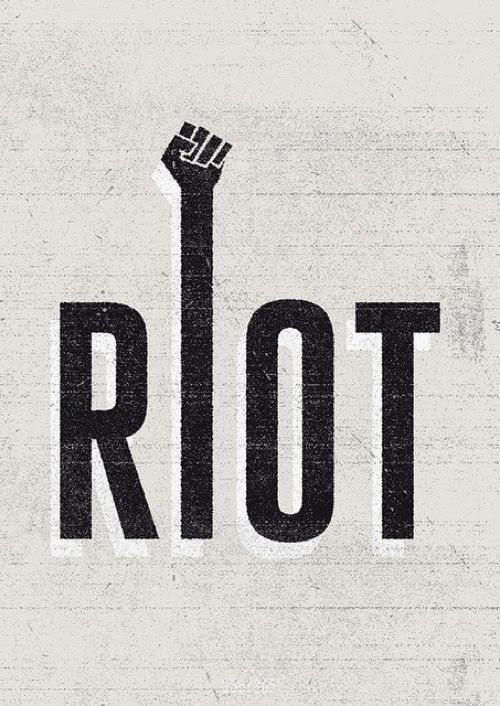
RIOT Response


RESPONSE TO RIOT


  • Fire
  • Destruction
  •  Rebel
  • Power
  • Flags
  • Noise
  • Masses of people
  • Smashed items
  • Red/ Orange/ Black
  • Hot
  • Scary
  • Screams
  • Wild Animals
  • Lion / Crows/ Raven
  • Signs


Thursday, 17 April 2014

Skills Week | Scenic Painting

This week we have been working in the Nottingham Playhouse workshop learning scenic painting techniques.
We started by taking a picture of a column that we liked then marked it out onto the board.
I thoroughly enjoyed marking out and building up the layers of paint for the column. Learning how to start with a light, watery base paint and creating marks in it which would show through at the end of the project. From here, the we then moved on to darker colours to create shadows. We started with a light colour first so that we could still see the lines that we had drawn on.
After creating the shadow we moved onto the making the darker sections a bit more dramatic. We did this by using more layers and using textured sponges. The sponges create the lines which I put on the left hand side of my pillar. Because it is meant to be viewed from a fair distance the lines of the sponge give a good visual effect of the shadow gradually darkening.
After the shadowing, we then placed some highlights along certain sections of the column. I chose the light to be coming from the middle right, as if the sun was setting to create a slightly harsh shadowing appearing on the left, I had pre decided what I wanted to do for a back ground and thus the lighting placed itself.

For the background I had already thought about and been inspired by an artist who inspired me a few years ago, as still does. I chose to follow the techniques of Bob Ross. I wanted to make a dream like sky which was beginning to set. I chose to use light blue and pink to create a dream like sky, towards the end of painting the sky I realised that I did not want the column to have little context, so from here I decided to make a mountainous landscape, giving the illusion that the column was at the top of a hill and from the top you could see mountins in the middle distance.

I really enjoyed this skills week and felt inspired again. I think I learnt a lot and I was a lot more carefree with my work than I normally am.


Friday, 11 April 2014

Puppetry Project


For this next project we will be working around a contract with Nottingham Castle.
We will be making three carts and then parading them at the castle in celebration of what came out from the Nottingham riots of 1831. 
In 1831, a group of rioters decided to invade Nottingham Castle which was owned by the Duke of Newcastle. The Rioters managed to get in to the castle grounds and burn down the castle.


Friday, 28 February 2014


Modelling on a Drawing Mannequin -


We started the new project by working on the drawing mannequins. Using our costume designs from The Beggar's Opera project in the first half of the term we are now developing one of our costume designs and making them into a 3D design.

I have chosen to recreate and model into a 3 dimensional costume my design for Miss Peachum. I think I wanted to do this particular costume because I thought that I could best represent the comedic aspect that I wanted to do for my concept.


With the mannequin, wrap cling film around the body and limbs to protect the wood from getting glue or paint on it. The Cling film will also be useful at the end when it comes to cutting off the tissue paper costume.

- Wrap mannequin in cling film to protect the mannequin.
- Start building up the shape of the costume that you are wanting to recreate.
       - Women - make sure to include the under garments too illustrate the time period.
- Build up the tissue paper with glue and get the desired shape and silhouette of the time period.
- Colour the costume - either with coloured tissue paper or paint.
- Leave to dry
- Once dry cut a straight line down the back of you costume, this will make it easier to remove later.
- Leave to stand - perhaps create a structure that you could use to help the tissue paper costume keeps its shape whilst its not on the mannequin.

Repeat again doing a Man if you have already done a Woman, or vis versa.


Thursday, 13 February 2014

Skills Week | 18th Century Corset Making


This week we have been learning how to fit and construct an 18th century corset. After working on a set design for an 18th century play, I found this skills week to be very useful and rewarding. Having the skills week, a week before our Beggar's Opera project finished, it gave us time to see one to one how the silhouette of the time period was made.

I have really enjoyed this skills week as it allowed me to go back to the sewing machine, something I am comfortable using but also pushed me to learn new things, such as pattern laying, amending the basic pattern to fit me and seeing how the panels and boning channels work together to form shape and support for the wearer.

My corset fitted well and given another day I would have been able to finish it entirely. At the end of the week the only section I had left to do was the bias binding around the neck of the corset. Unfortunately with the number of people and number of machines there wasn't enough time to finish the corset entirely so this I finished off in my own time.


Saturday, 8 February 2014

Making the Set - Picture Frames.

I liked the idea of comedy in a show, I also thought that social class was important in The Beggar's Opera To combine the two on stage I decided to use large (over sized) picture frames, painted in gold and bronze. 

The frames are to represent the quality and hierarchy of those with power over those without. I chose to link two of the frames, one gold and one bronze to demonstrate that the social classes will always intertwine and be around each other. 


I made the frames from black card because I thought that it would give the best surface to stick clay to. 

Thursday, 9 January 2014

The Beggars Opera Themes

Themes that are explored the The Beggar's Opera...

Equality: Equality is hinted and mocked at in the Beggar's Opera, it has come up in discussions that the social classes of the time are quite different. A big contrast between the generously rich and the desperately poor.

Marriage: In the world of The Beggar's Opera, marriage doesn't quite have the same kind of meaning as I would have thought it to have. Marriage doesn't hold the romance and loyalty as it probably should have in this play. There's isn't much about the sense of honestly or loyalty in the play and the emotions of the characters seems to be more about themselves than that for others. For example when Polly and Lucy realise that they are playing against each other, Lucy plans ways to get rid of Polly so that she can have the attention of Macheath to herself. 

Dishonesty: Macheath marries or commits to several different women, give promises but ultimately know that he doesn't really want them completely. He lies and cheats to get things from them but in the end he is given freedom and chooses one of the women he really loved/lusted, Polly. Another thing that I believe John Gay is trying to say throughout the play is how the people get into high places (jobs and positions in society) not through virtue, but through dishonesty.

Friendship: This is an interesting thing to think about through the play. There seems to be a strong sense of friendship between the main characters. This is however up until the moment that the two families daughters fall and in fact marry the same man. The friendships are connected by crimes, however the friendships are mostly controlled by the characters selfishness and not being considerate to each other's future.

Self Awareness: Throughout the play, each character is constantly blaming others around them for their own faults. Another thing about the characters in the play is that a a few of the characters, specifically Polly and Lucy, they argue about their love and marriage to Macheath, however they soon realise that they have both fallen for the same guy with the same problems. Soon after conversing, they realise that they aren't all that different. I think what might be trying to be passed across to the views/audience is that we need to look closer at ourselves before throwing blame elsewhere.

Law: There doesn't seem to appear to be any sense of an enforced law. The Peachums and Lock's don't take any time at all in thinking twice about killing Macheath. In fact none of the characters in this story seem to care or have and moral sense about anybody, be it friend or family being killed or dying. The lawyers seem to come off as the worst type of people in this society. Repeatedly invoked throughout the play as the prime example of those who profit by the vice of other. Protecting the people in the wrong one day then prosecuting them then next.

'Ballad Opera'

What is a Ballad Opera?

'ballad opera characteristic English type of comic opera, originating in the 18th century and featuring farcical or extravaganza plots. The music was mainly confined to songs interspersed in spoken dialogue. Such operas at first used ballads or folk songs to which new words were adapted; later, tunes were borrowed from popular operas, or music was occasionally newly composed.'

Quote taken from : http://www.britannica.com/EBchecked/topic/50485/ballad-opera


Saturday, 2 November 2013

Skills Week | Mask Making Prosthetics


Over the past week, we have been learning a new skill. We have started to build a basis of knowledge about mask making. One of the types that we have been learning is the process of prosthetic mask making. We started off in small group of five and one member of the group put themselves forward to be the model for the mask. This process involved using latex, placing it onto the model's entire face, making sure that the nostrils were kept clear of the mixture. Somebody in the group was on duty to make sure that the models nostrils weren't covered and that the model felt comfortable and able to breath comfortably. 


After the mixture are solidified a bit more, we then used cut up strips of mod rock and started covering the latex. Again making sure that the models nose wasn't covered up and that they still felt comfortable. After adding a couple of layers to the mod rock, we then waited for it to strengthen, before taking the whole mould off of the models face. 

Once the mould was completely removed, it was really fascinating to see the fine details of the eyelashes and eyebrows that the mould had picked up. 

Because we didn't cover up the models nose whilst layering up the materials over the mould, there was a hole in the mould. To fix this we added more mod rock to strengthen the nose section. The mod rock creates a hard external layer which is necessary  apply because once we add the plaster the mould can loose it's shape, distorting the face, which means that it wouldn't fit properly back onto the model once finished.  


The mould of Jenny's face then gave us the basis to create the character that we designed. An old haggered witch. From here we then covered the mould of Jenny's face with clay to create the features of the witch. This process was shared between us all and we all had separate sections that we added to the process. Starting with the basis of the witches facial features, then bulking out the shape and defining some lines. The last step was to create texture to the face. We did this by using a soft paint brush to create lines across the face and a spatula to add deep wrinkles in the forehead and cheeks.
The next step was to take the negative mould of the witches face and insert the original mould of Jenny's face. Creating the colours of the face was the next step. For this we added equal measures of polyurethane and mixed them together, making sure that all was equally mixed, then adding tiny amounts of colour to the mixtures. We chose to make a fleshy colour and add a bit of green to the mixture so that the witch looked evil and old. This process had to be done quite quickly in order for the mixture to work properly,it also should be done from a slight height and at one point only, this is to make sure that there are reduced risks of air bubbles. 


We added the colours into the mould and tilted the mould around to make sure that there weren't any air bubbles in the mixture. 


After leaving the mixture for about half an hour we returned to check on it. We actually found that there was a crack in the mould and that some of our mixture had leaked out, we fixed this by adding some fresh clay to patch up the leak. 


Overall I think that we worked well in a team and that the final outcome was fairly successful. 
The only thing that I believe we might have worked on a bit more, was designing and developing the character. The actual face and the design worked well, what I mean is that when it came to colouring and making textures for the face, as a group we weren't quite ready or sure as to what we wanted. Another thing that would have been better, had we had time to think and work around was the fact that once we had glued the mask onto Jenny's face we learnt from jenny that the forehead was very heavy and that it slipped down her head, moving down onto her eyes, making it uncomfortable. To counter act this we worked on holding the mask in place, holding different sections to prevent it from sliding. To complete the mask we painted on top of the mask whilst it was secure to Jenny's face to create deeper shadows and age spots. 


Skills Week | Mask Making Paper


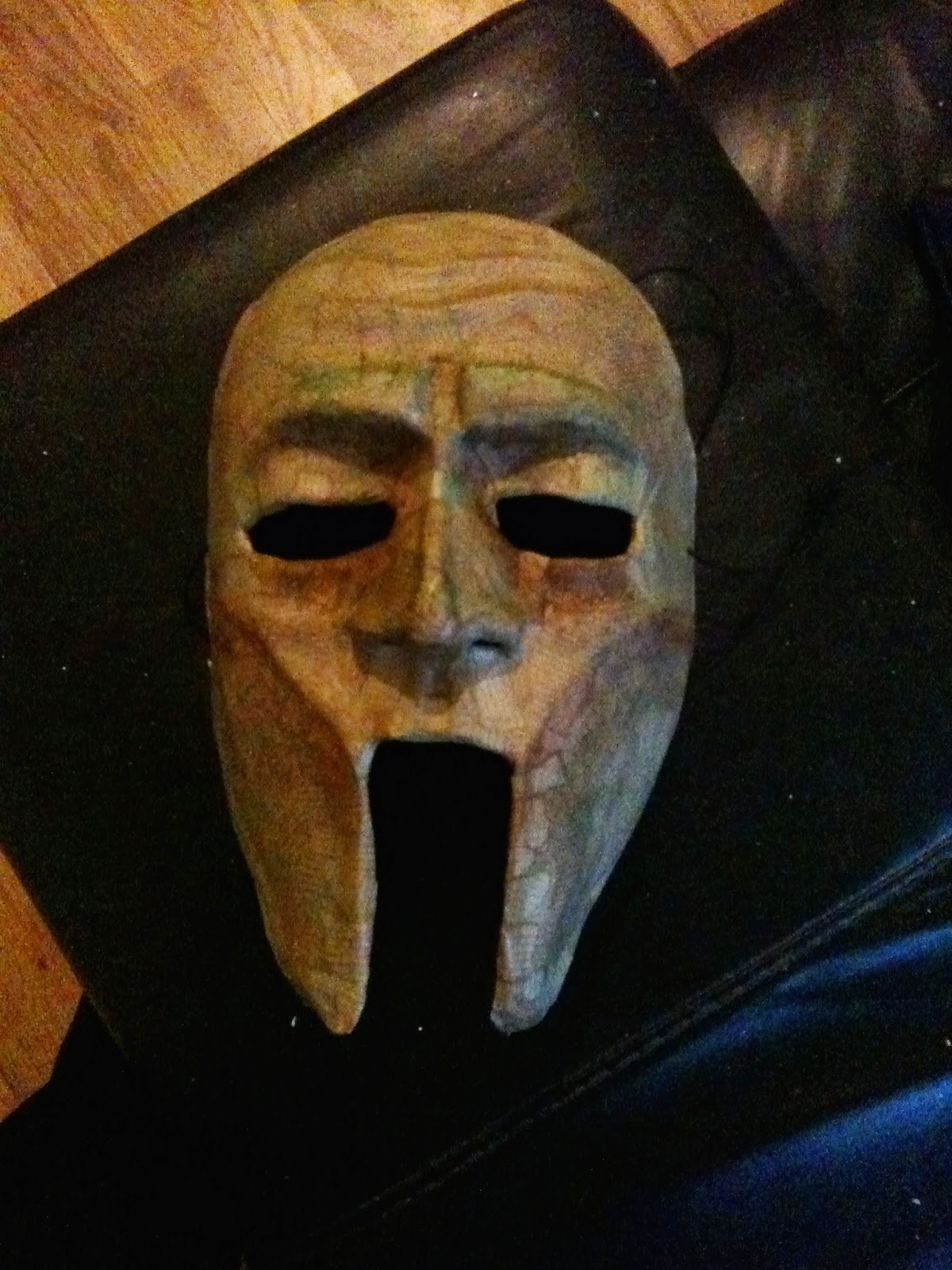
The second type of mask making that we did this week was to make a mask using clay and paper. 
We started this project of by being given two words. My words were 'Weary' and 'Sentinel'. 

After this we then we given a basic mould of a face and asked to build on top of it. Using clay we built up a basic shape. I chose to go with a very uniformed and strong shaped face to connect to the sentinel, guard sort of idea. 

Building onto of the face we worked into the clay and created strong lines and forms across the face. Once the mask was complete, to the way in which we want then we covered the mask in vasiline so that the plaster we put over the mask wouldn't stick or ruin the shape. 


Before creating the plaster mould we made a clay barrier so that the plaster wouldn't slip everywhere. Mixing part water and part plaster (enough so that the plaster powder peaks just above to water line). Then mixing them together to create a thicker, dense liquid. We drip the plaster over the mould, making sure we get into the eye sockets, even blowing air into the harder to reach areas and getting out the air bubbles. Once the finer details like the nose, eyes and mouth are all sorted we then drip more of the mixture over the entire face and layer it up to create a solid bowl like structure. Once there are enough layers, using a flat spatula or blunt bread knife create a flat surface, making sure to be careful enough to not catch the clay underneath the wet plaster. The flat surface is for later when the solid plaster will turn upside down, and sit stable on the table. 

Once the plaster has dried over night we then carefully remove the clay and we are then left with the negative mould of the mask. Clean out the clay that has stayed in the plaster mould with water and then cover the inside with more Vaseline. This is for the paper that we then layer up in the negative mould. Starting with the nose, as this is the hardest place to get to, then working on out to the sides of the face. Making sure everything is covered in brown paper and glue, let this dry. 

Once the brown paper and glue are dried, tare pieces of blue cloth and repeat the paper mashe technique, creating another layer. When paper mashe-ing, with the brown paper and blue cloth, it is important to cross over the pieces, this makes for a stronger structure. 

For the final layer, another layer of brown paper finishes the structure. Because the layers will still be wet, especially the nose, we then used a hair drier to allow the paper mashe structures pull away from the plaster. 


Fortunately I didn't have any problems with my mask pulling cleanly away from the plaster structure. However some others in the class had a problem with the nose not being fully dry and unfortunately not staying in shape because it hadn't fully dried. To fix this they used more brown paper to strengthen it or in some other cases just placing it back into the mould and leaving it to dry more. The mould helps to keep the shape of the mask and so this is the best thing to do if the mask isn't fully dried. 


To finish off the mask we measure the best place to punch holes into the side of the masks for the elastic to go through. by doing this we worked together and placing the mask on whilst another person lines up the eye holes with the top of the wearer's ears, then measuring in 1cm from the side to punch the holes. 

Tuesday, 22 October 2013

Site in the City Installation


The past week we have been really focusing down on the Site in the City project. 

Talking a walk around the city I came across the Castle in Nottingham. I hadn't visited it before and when I was walking outside along the wall, there was somebody practising singing inside, (maybe for a performance or something). This reminded me about the scene in the story of Cinderella and Ash Puttel. With this I then decided to look at the scene in the story where the protagonist is given something special, ie - Cinderella, where the Fairy Godmother gives Cinders a dress, a coach and coach men. I then began to look at what we, as 20 year olds remember about the story, and the magic scene was what was most mentioned. 

I then decided to look at what we actually remember. As well as what kind of objects or imagery we associate with memories or stories.

This then lead me to picking up a pumpkin, ivy vines and choosing to place it outside the castle. However with Halloween just round the corner, I thought this will just remind people Halloween is drawing in. So my next thought was to come up with a way in which to make people think a but harder about what a pumpkin and vines, placed by a castle is actually there for. 
To do this I decided to create a 'RESERVED' sign, as in it was reserved for Cinderella by her Fairy Godmother. 

I also added a bit of glitter to the piece to make it more interesting, and make people ask a few more  questions. 


The first place I had originally chosen proved to be ineffective. This was quickly learnt as I realised people didn't walk round the entire way, they seemed to stay one side of the area more. This then meant I moved the piece over to under a tree in a open space. 

Here the pumpkin gained a lot of views and some people taking photo's with it?
Not sure why. 
Asking people who had spotted it and had gone in to take a closer look, I asked what they thought it was here for, what it might mean and what it reminds them off. 
Out of the number of people I asked about 7 of them understood it completely, but were unsure as to whether it was what it was therefore. The uncertainty was gone however when I explained my idea to them. another 3 people didn't connect to it completely but as soon as I confirmed or explained they then understood and retold the story to me to make sure they were right. There was only one person who did not connect to it at all and it turns out they had never seen the Disney film, read the story or a stage production.

Over all I think it worked out fairly well, it has also given me more confidence about my own work and I feel more confident in myself and my work to do it again or try out new ideas. 


Friday, 18 October 2013

Charlie Peace and Bamboozle.

Ritual:
Bamboozle
·  Healing
           - Relaxing
           - Drums
           - Helper
           - Initiates - Not directly involved

    ^ Shamanistic like experience
           - Sensory Stimulus
- Water
- Meditating
- Pure / Honest
( Not conventional western medicine)


In Bamboozle the children were introduced to new objects, a new object was only introduced by music and the sound of the drums. (Which was muted, this made it less introducing and harsh.)

Water was used as cleansing in bamboozle, to entre the dream. This gave the sense of  a clean start to a story.


Performance/ Audience Relationship:
Bamboozle
· Music used to connect to the kids
· Pillows; hugging/ blankets as a sense of comfort and familiarity
· Performer being alive to the moment, reacting to the kids, seeing if they want to be hugged by the pillow, if they accept it. If not to performer moved over to the carer to show the children that it was ok and safe.
- Teaching new techniques to the carers to use later.
· Only trying to connect with one person, their eye contact
· Before the performance, the performers engaged with the children, learnt their names and introduced themselves to the children to create a relationship with them.

Charlie Peace
· Broke the fourth wall by entering the audience and interacting with them
· The genre of the play was based around the 19th Century tales
- Music Hall
- Mellow Drama

Object and Design:
Bamboozle
· Pastel/ Natural colours
· Simple and beautiful set
·  - Don’t think they quite explored the set, the items and it’s movement.
· Anthropomorphism
· Dream like, soft items
· Shadows
· Intermit

Charlie Peace
· Not well incorporated in the space
- Projection was very illustrative
- Actors were not always lit properly
- The circle moulds on the roof were moulded into the set, se when other projections were used, it didn't fit properly

Time and Space:
Bamboozle
· Look through the child’s eye’s
           - Creating their world
· Journey of ritual welcoming engagement of pillows (in character), the sling (the character), of lightness and the bird object which was developed through movement of flight.
· Dramatic structure rather than narrative
· Like a den for children
· Kids were allowed to think differently in the space
· Closed and intermit
· Patient atmosphere
· Took us into the world of the audience

Charlie Peace
· Confusing time era
· Costumes weren’t helpful in passing across the idea of time and age


Image, Light and Sound:
Bamboozle
· Gong—introduced to the kids to relevance the sounds
· Calming and soothing music
· Kids were fascinated with objects and there shadows
· Feathers and lateens
· Sign language was used when ‘thank you’ was repeated
· Simple structure

Charlie Peace
· Dim lighting
· Sometimes, depending on where the actors were on set, they were not properly lit
· Projection


Narrative and Structure:
Bamboozle
· In the Round
· Entre the dream —  In the dream —  Wake up from the dream
· Floating and flying types of feelings

Charlie Peace
· A non– chronological series of events